How Do AI Search Engines Decide Which Sources to Cite?
AI search engines do not cite the page that ranks first or the page that says the most. They cite the source that is easiest to reach, cleanest to extract, safest to trust, densest with verifiable fact, and current enough for the question being asked.
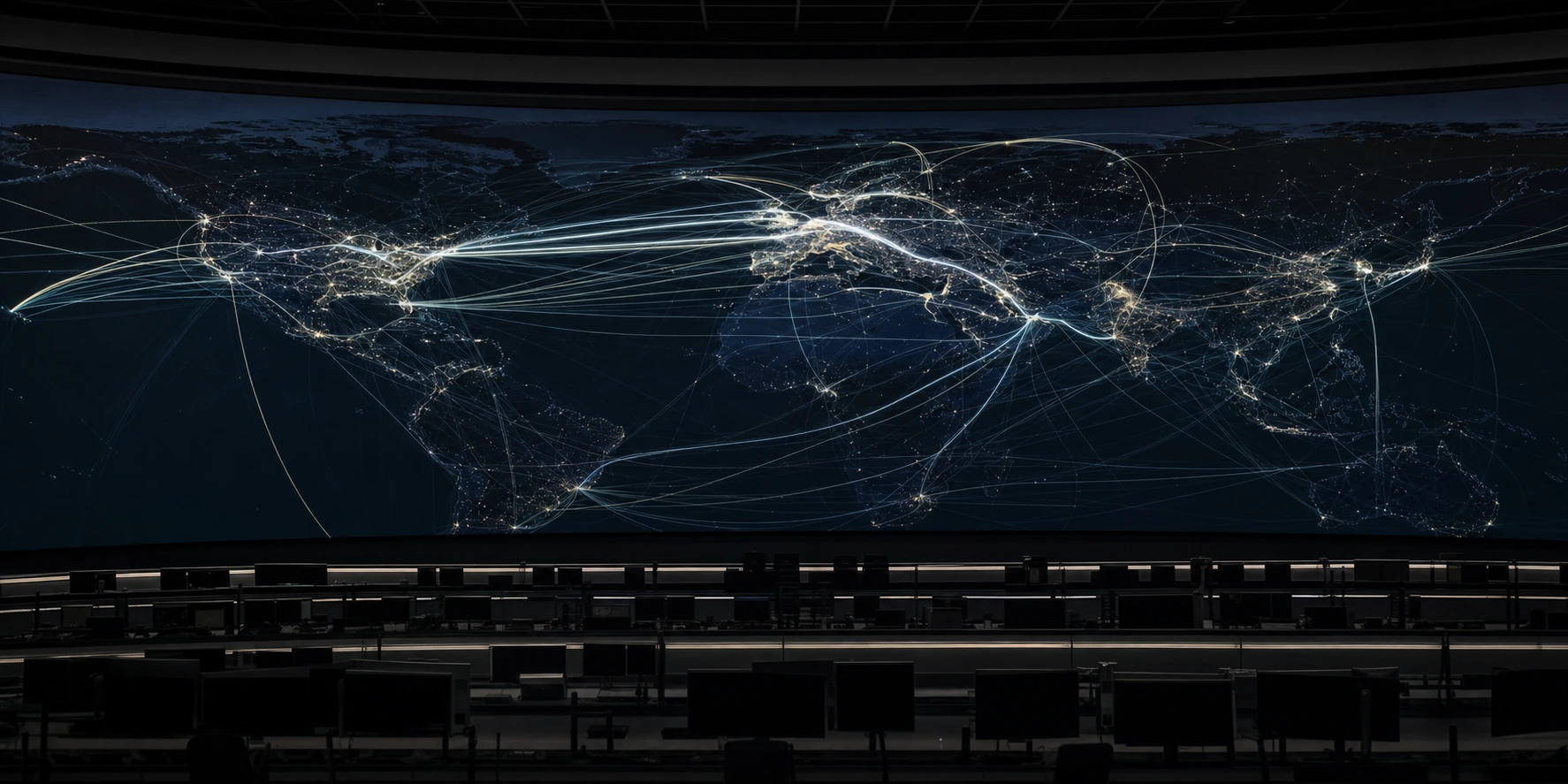
How an AI Answer Gets Built
Every AI search answer is assembled in four steps: the engine retrieves a pool of candidate sources, extracts passages from them, scores those passages against a fixed set of signals, then cites only the few that score highest. The gap between being retrieved and being cited is the whole game, because most pages reach the pool but never make the answer.
AI search engines decide which sources to cite by running every candidate page through the same sequence of checks. The engine first has to reach the page and read it, then pull a clean, self-contained answer out of it. Then it weighs whether the source is trustworthy on the topic, specific enough to verify, and current enough for the question. A page that clears every check earns the citation. A page that fails any one of them gets retrieved, considered, then quietly dropped.
This decision now shapes a large share of buyer research. A Pew Research web-browsing study found that 58% of surveyed US adults saw an AI summary in a Google search within a single month, while Bain's research on AI search found that ChatGPT prompt volume rose roughly 70% in the first half of 2025. The engines doing this narrowing are now mainstream, so where a page drops out is a revenue question.
That sequence has a name. The DSF Five-C Citation Model is a framework describing how AI search engines decide which sources to cite, where every cited source must clear five sequential checks: Crawlability, Clarity, Credibility, Concreteness, and Currency. The five run in order, because each one depends on the one before it. An engine cannot judge a page's clarity if it could not crawl the page, and it cannot weigh credibility on a passage it could not cleanly extract.
Underneath the model is retrieval-augmented generation, the architecture every major answer engine now runs. Research on source attribution in retrieval-augmented generation describes the core move: the system pulls in many candidate documents, then works backward to identify which of them actually shaped the answer.
Google has documented its own version. Its AI Mode update describes a query fan-out technique that breaks one question into many simultaneous searches, then narrows the results to a small cited set, with Deep Search producing what Google calls a fully-cited report. For the research-led companion to this framework, see how AI models select sources for citation, which walks the four-stage Source Corroboration Pipeline in detail.
The narrowing from many candidates to a few citations is where visibility is won or lost. A page can sit in the candidate pool for thousands of queries and never once be named in an answer. The Five-C Citation Model exists to explain, in plain terms, what the engine checks during that narrowing, so a publisher can see exactly where a page drops out.
From Candidate Pool to Cited Answer
Crawlability: Can the Engine Reach Your Page?
An AI search engine cannot cite a page its crawler cannot reach, render, and read. Crawlability is the first check in the Five-C Citation Model, and it is the one that quietly disqualifies the most pages, because the failure is invisible from inside the business.
AI engines fetch content through named crawlers. OpenAI's crawler documentation states plainly that OAI-SearchBot is the agent that surfaces websites in ChatGPT's search features, and that a site which disallows it will not be shown in ChatGPT search answers. Gemini, Perplexity, Claude, each run their own. When a robots.txt file blocks one of these agents, that engine is simply blind to the site, no matter how strong the content is.
Most blocks are accidental. A defensive robots.txt rule written in 2024 to keep AI training crawlers out also blocks the retrieval crawlers that now power AI search, and the two look identical in the file. Cloudflare's crawler analysis found that roughly 14% of the top 10,000 websites already publish robots.txt rules targeting AI bots, while GPTBot's share of crawler traffic climbed to 7.7% from 2.2% a year earlier. The crawlers are at the door. The real question is whether the door is open.
Rendering is the second way Crawlability fails. AI crawlers read the HTML in the initial server response, and most do not run JavaScript. A site that builds its main content with client-side JavaScript hands the crawler an empty shell. Server-side rendering, static generation, plus clean structured data are what make a page legible to a machine. Google's own structured data documentation frames it directly: structured data lets a publisher explicitly tell the engine what the content is about, who wrote it, what it covers. For the deeper walkthrough, see understanding schema markup for AI visibility.
The AI Crawler Landscape in 2025
Clarity: Can It Extract a Clean Answer?
AI engines cite passages, not whole pages, so a page is only citable if its structure lets the engine lift a self-contained answer out of it. Clarity is the second check in the Five-C Citation Model, and it is the one a publisher controls most directly with editing alone.
A retrieval system breaks a page into chunks at structural boundaries: headings, paragraph breaks, list items. A 4,000-word article with vague headings and run-on paragraphs produces chunks that mean little out of context. A tightly structured article produces chunks that each stand on their own. Carnegie Mellon research on generative search engines found that citation likelihood rises with clear structure, descriptive headings, lists, a neutral tone, and factual claims tied to credible sources. The same study found that 78% to 84% of the rules that drive citation are shared across Gemini, ChatGPT, and Claude, which means clarity pays off on every engine at once.
The practical version is simple. Put the answer first in every section, then support it. Write descriptive headings that state what the section concludes rather than tease it. Use lists for steps, tables for comparisons, short paragraphs for single claims. Each of those is an extraction boundary the engine recognizes, so a clean passage falls out without the model having to guess where the answer begins or ends.
Google's guidance for AI features reaches the same conclusion from the platform side: pages should be helpful, people-first, and backed by accurate structured data that matches the visible text. Clarity is not a style preference. It is the difference between a page that gets parsed cleanly and a page the engine sets aside for an easier one. The deeper structural patterns are covered in the architecture of AI-citable content.
What the Engine Extracts: Clear Page vs Messy Page
| Structural Element | Clearly Structured Page | Poorly Structured Page |
|---|---|---|
| Headings | State the section's conclusion | Vague or absent |
| Paragraph openings | Answer first, support after | Answer buried mid-paragraph |
| Lists and tables | Steps and comparisons marked up | Prose only, no structure |
| Chunk self-containment | Each chunk makes sense alone | Chunks need surrounding context |
| Extraction result | Clean passage, cited as written | Set aside for an easier source |
Credibility: Does It Trust You on This Topic?
AI search engines weigh source trust at the level of topic, not domain, so a site is credible on the subjects it covers deeply and invisible on the ones it touches once. Credibility is the third check in the Five-C Citation Model, and it is the slowest to build, because it is the one a publisher cannot set with a code change.
Credibility is also why citations concentrate. Research on news citation patterns in AI search systems found that the top 20 sources captured 67.3% of all citations on ChatGPT, 31.9% on Google, and 28.5% on Perplexity. The engines return again and again to the sources they have learned to trust on a subject. A new page on a trusted topical domain inherits some of that trust. A strong page on a domain with no track record on the topic does not.
Ranking helps, but it does not decide credibility. Research on the overlap between AI Overviews and organic rankings found that the cited URL is the number-one organic result only about 43% of the time, and that many cited pages rank well outside the top three. A page earns credibility through depth of coverage, consistent entity signals, and corroboration from sources the engine already trusts. The mechanics are covered in how to build topical authority for AI search and in how AI chooses which websites to cite.
Credibility also has a human dimension the engines now measure. Trust in AI answers is real but not unconditional: Pew Research found that 53% of US adults have at least some trust in AI summaries, while a large share remain skeptical, which pushes the engines toward sources they can defend. Digital Strategy Force treats credibility as the compounding asset of the five, because the work done this quarter raises the citation ceiling for every quarter after it.
How Concentrated AI Citations Are
Concreteness: Does Your Page Give It Verifiable Facts?
A passage dense with named entities, specific numbers, and sourced claims gives an AI engine anchors it can verify, so verifiable passages get cited far more often than vague ones. Concreteness is the fourth check in the Five-C Citation Model, and it is the one most marketing copy fails.
The mechanism is straightforward. A sentence that names a specific tool, a dated event, a precise figure gives the model something it can cross-check against everything else it knows. A sentence that says a process is "powerful" or "industry-leading" gives it nothing. The Carnegie Mellon research on generative search engines found the same pattern from the engine side: factual claims attributed to credible sources with clear citations are among the strongest predictors of whether a passage gets used.
"An AI engine never sees a page the way a reader does. It checks whether that page can be reached, parsed, trusted, verified, then dated, then it decides in milliseconds."
— Digital Strategy Force, Search Intelligence Division
Concreteness compounds with itself. A page that cites its own sources signals that its claims can be traced, which is exactly the signal an engine looks for when deciding what to trust. Every external link to a primary source, every named statistic, every dated reference is a verification anchor. A page built from anchors gets cited; a page built from adjectives gets skipped. The discipline of building those anchors is covered in citation building for AI search.
The fix is editorial, not technical. Walk every important page and ask, sentence by sentence, whether a claim is specific enough to verify. Replace the vague intensifier with the named fact. Replace the unsourced number with the linked one. Concreteness is the cheapest of the five checks to improve, because it costs nothing but precision.
The DSF Five-C Citation Model
Currency: Is Your Content Fresh Enough to Matter?
Content freshness changes citation odds, but how much it matters depends entirely on the question being asked. Currency is the fifth check in the Five-C Citation Model, and it is the one publishers most often misjudge, because they treat it as universal when it is conditional.
Search engines have long run freshness logic. Google's ranking systems documentation describes query-deserves-freshness systems built to surface newer content for queries where recency is expected. The key word is expected. For a breaking-news query, a page from last week loses to a page from this morning. For an evergreen reference query, a well-built page from two years ago can still win, because the question does not change.
The practical takeaway is to match publishing cadence to query type, not to chase freshness blindly. A page targeting time-sensitive topics needs a real refresh cycle. A page answering a stable question needs accuracy maintenance, not a date change. Engines compare versions to detect whether an update is substantive, so bumping a date without changing the content earns nothing. The freshness signal rewards genuine maintenance.
Currency is the cheapest check to pass and the easiest to neglect. A quarterly review of the highest-value pages, with real updates where the facts have moved, keeps a library current without a constant publishing treadmill. The goal is not to look fresh. It is to be accurate when the engine checks.
How Much Freshness Weighs, by Query Type
Why ChatGPT, Gemini, and Perplexity Don't Agree
The five checks are universal, but ChatGPT, Google AI Overviews, and Perplexity weigh them differently, which is why the same page can be cited by one engine and ignored by another. The Carnegie Mellon research put the shared core at 78% to 84% of citation-driving rules, which leaves a real margin where each engine behaves on its own logic.
The differences trace to how each engine is built. Google AI Overviews inherit decades of ranking machinery, so they lean hardest on Credibility and structured data. Perplexity runs a live retrieval pass per query, so it weights Currency and breadth more than the others, which is also why its citations are the least concentrated. ChatGPT, per OpenAI's own crawler documentation, gates everything on OAI-SearchBot access first, then leans on Credibility and Concreteness. Anthropic's research on its multi-agent system describes a dedicated citation step that attributes every claim back to a source, which raises the bar on Concreteness specifically.
How the Five C's Weigh Across Platforms
| Check | ChatGPT | Google AI Overviews | Perplexity |
|---|---|---|---|
| Crawlability | High: gated on OAI-SearchBot access | High: Google-Extended access required | High: live crawl per query |
| Clarity | High | Very high: structured data leaned on | High |
| Credibility | Very high: most concentrated citations | Very high: inherits ranking trust | Medium: broadest source set |
| Concreteness | Very high | High | Very high: accuracy-first pipeline |
| Currency | Medium | High: fresh-content boost | Very high: live-crawl recency |
Perplexity's own API documentation shows how seriously it treats sourcing: every answer is returned with a structured set of citations and search results, each carrying a title, a URL, a publication date, and a snippet. Sources are not an afterthought bolted onto the answer. They are a first-class part of what the engine produces, which tells a publisher exactly what to optimize for. The practical move is not to optimize for one engine. It is to clear all five checks, then tune the one or two that the priority engine weights hardest.
The Five-C Citation Readiness Scorecard
The order matters as much as the checklist. Crawlability and Clarity are fast, structural fixes a technical team can ship in a crawl cycle. Credibility and Concreteness compound over months. Currency is a cadence decision. Work the checks in sequence, because effort spent on Credibility is wasted while Crawlability is still failing. For the diagnostic view of the same problem, see why some websites appear in AI answers and others don't.
FAQ: How AI Cites Sources
What do AI search engines look at when deciding which sources to cite?
They run every candidate page through five checks: Crawlability (can the crawler reach and read it), Clarity (can a clean answer be extracted), Credibility (is the source trusted on this topic), Concreteness (does the passage carry verifiable specifics), Currency (is it fresh enough for the question). A page must clear all five to be cited. Failing any one keeps it in the candidate pool but out of the answer.
Why does my page get found by AI but never cited?
Being retrieved is not being cited. If a page shows up in the candidate pool but never in the answer, it cleared Crawlability but failed one of the other four checks. The most common culprits are Clarity, where no clean passage can be extracted, and Credibility, where the source has no track record on the topic. The fix is to identify which check fails first and work from there.
Do ChatGPT, Gemini, and Perplexity cite sources the same way?
They use the same five checks but weigh them differently. Carnegie Mellon research found 78% to 84% of citation-driving rules are shared across engines. Google AI Overviews lean hardest on structured data and established authority, Perplexity casts the widest net and rewards recency, and ChatGPT concentrates citations on a small set of high-trust sources. Clearing all five checks works everywhere; tuning the heaviest one or two works per engine.
Does my page need to rank number one on Google to get cited by AI?
No. Organic ranking helps but does not decide it. Research on the overlap between AI Overviews and organic rankings found the cited URL is the position-one organic result only about 43% of the time, and many cited pages rank well outside the top three. Credibility and Clarity matter more than rank position, which is why a smaller site with deep topical coverage can be cited ahead of a larger one.
How long does it take to get cited after fixing these things?
It depends on which check you fixed. Crawlability fixes, like unblocking AI crawlers or moving to server-side rendering, can take effect within a crawl cycle, often days to a few weeks. Clarity fixes land nearly as fast. Credibility compounds over months as topical depth accumulates. Digital Strategy Force sequences the fast structural fixes first, so early wins fund the slower authority work.
How do I know if AI search engines are actually citing my site?
Three signals together. Watch analytics for AI-referral traffic, since ChatGPT, Perplexity, and Gemini tag the visits they send. Test the prompts your buyers actually use and record which sources get named. Track citation share over time rather than checking once. Digital Strategy Force builds this measurement layer into every engagement, because traditional analytics do not surface AI citations on their own.
Next Steps: How AI Cites Sources
The five checks are not a ranking secret. They are an engineering checklist. Digital Strategy Force works through them in priority order, so the fastest fixes compound into durable citation share.
- ▶Run the Five-C Readiness Scorecard against your ten highest-value pages, then fix the first check that fails
- ▶Confirm AI crawlers can reach those pages by checking robots.txt for OAI-SearchBot and other AI agents, server-side rendering, valid structured data
- ▶Rewrite each page answer-first, with descriptive headings and extractable lists so a clean passage can be lifted out
- ▶Add named entities, specific numbers, primary-source links to the claims that carry the most weight
- ▶Set a content-refresh cadence matched to how time-sensitive each topic is, then update substance rather than dates
Want to know which of the five checks your site is failing right now? Explore Digital Strategy Force's Answer Engine Optimization (AEO) services and turn citation selection from a guessing game into an engineered outcome.
Open this article inside an AI assistant — pre-loaded with a prompt to read and discuss it.