How Do You Know if You Need a New Website?
The age of a website is the wrong test. A site needs replacing the day it stops earning its keep: when it describes a company you no longer are, when the systems that now decide who gets found can no longer read it, and when it quietly turns away the buyers who judge it in seconds. Read those four signals, not the calendar, to know whether you need a new one.
Why "Is It Old?" Is the Wrong Question
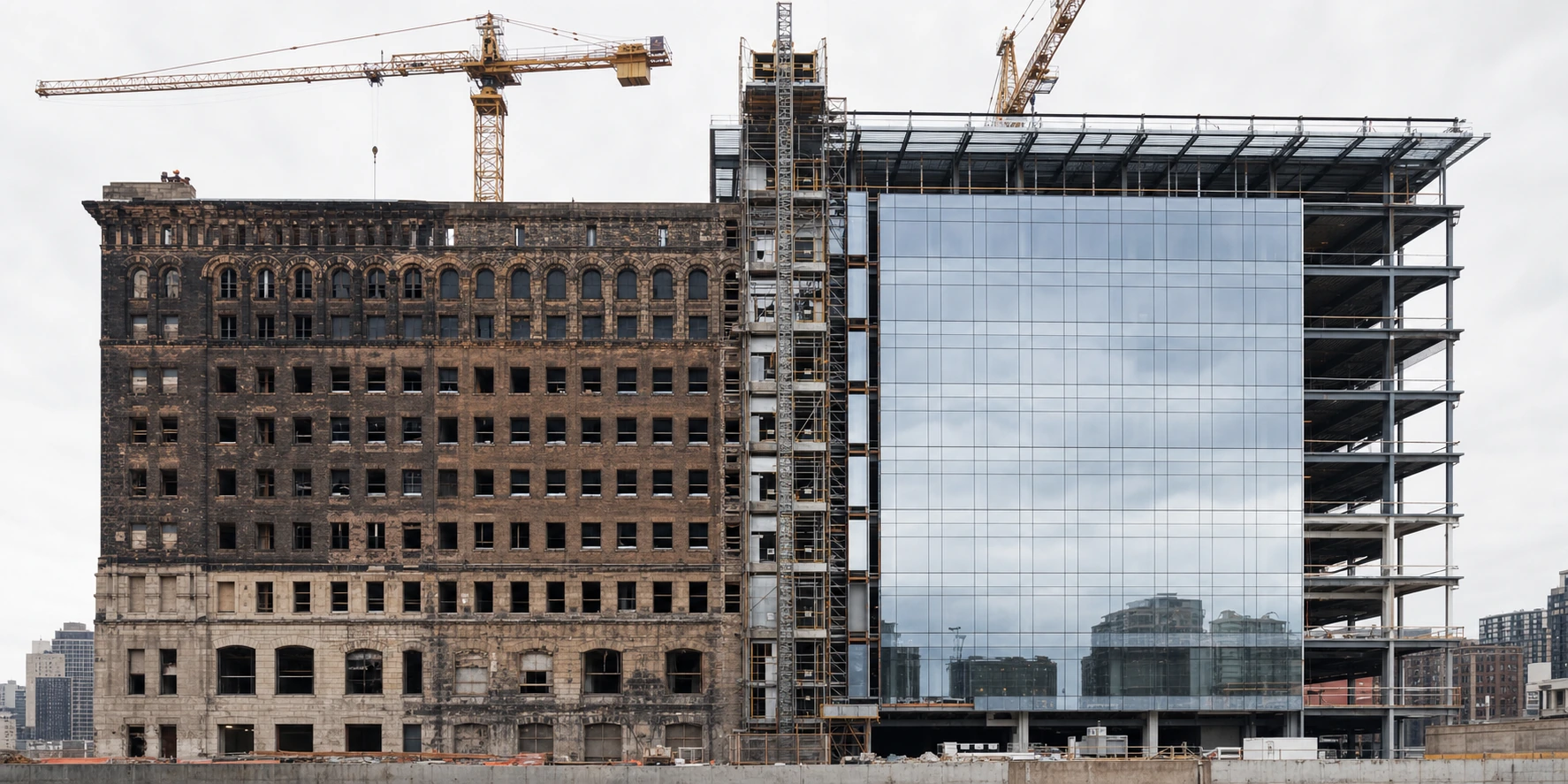
A website needs replacing when it stops earning its keep, not when it turns a certain age. Plenty of ten-year-old sites still do their job. Plenty of two-year-old sites already fail it, because the ground moved underneath them. The useful question is not how old the site looks to you. It is whether the site still fits the business, whether machines can still read it, whether it still converts the people who arrive, plus whether it can still be changed without breaking. Those four answers decide the matter.
Most teams reach for the wrong test because it is the visible one. A site looks dated on a big monitor, someone says it feels tired, then the conversation stalls on taste. Taste is not the problem. A website is a working asset, so the real question is whether it is still doing the work: bringing in qualified visitors, being found by the systems that now route buyers, then turning attention into inquiries. When it quietly stops doing that work, its age is beside the point.
This matters because the decision has a right answer, not just a preference. Replacing a site that is merely unfashionable wastes money. Nursing a site that has genuinely failed wastes far more, because every quarter it keeps leaking pipeline the loss compounds. The point of a clear test is to tell the two apart, so you spend on a rebuild when the business needs one, then hold off when a lighter fix will do. That is a question worth answering with a method, not a mood.
So this piece replaces the age test with four signals you can actually read. Before those four signals, it helps to see what a website is now judged against, because the standard has moved. The section below sets the stakes: who is looking, how fast they decide, plus how much of the decision now happens where you cannot see it.
What Your Website Is Actually Being Judged Against Now
Start with how fast a human decides. Research from Harvard on website aesthetics found that people form a lasting impression of a site "within the first 50 to 500ms" of seeing it. That verdict lands before a single word is read, so a dated, slow, or awkward first screen has already cost you credibility with a buyer who will never say why they left. What makes a visitor trust you in those first seconds is a topic in its own right, covered in what makes a new visitor trust your website in the first few seconds.
Now add who is doing the deciding, plus when. Most of a business purchase now happens before anyone contacts your team. Gartner found that 67% of B2B buyers prefer a rep-free buying experience, doing their research through digital channels first. Your website is the thing they judge during that unattended stretch. It is no longer a brochure a salesperson walks them through. It is the closer, working the deal while no one from your side is in the room.
Then add the newest judge: the machines. Google says its AI answers have "scaled to over 1.5 billion users" across 200 countries, plus its own research puts traditional search volume on track to drop 25% by 2026. A site is now read, summarized, plus quoted by systems that decide whether it even reaches the buyer. The dashboard below sets the four numbers that frame this whole decision.
The DSF Website Obsolescence Lens
The DSF Website Obsolescence Lens is a four-plane read for deciding whether you need a new website, plus what kind. It is a lens rather than a score because the point is not a grade out of ten. It is a diagnosis that tells you which fix the site actually needs. You look at the site through four planes, Fit, Findability, Friction, plus Foundation, then read which ones are failing.
The four planes split into two layers, plus that split is the whole point. Fit plus Friction sit on the surface layer, the part a visitor sees and feels, so a redesign recovers them. Findability plus Foundation sit on the structural layer, the part that governs how the site is built plus whether machines can read it, so only a rebuild fixes them. Read that way, the Lens answers two questions at once: do you need a new site, then is this a redesign job or a rebuild job.
One red plane is a warning, not a verdict. Two or more, especially on the structural layer, means the site has stopped earning its keep in a way a facelift cannot repair. The diagram below lays out all four planes, which layer each one sits on, plus which fix it points to, so you can see the whole decision before taking each plane in turn.
Fit: Has Your Business Outgrown Your Website?
Fit is the plane most owners feel first, then dismiss as vanity. It is not vanity. Fit asks whether the site still describes the company you actually are today. Businesses change faster than their websites: the offering expands, the pricing moves upmarket, the ideal customer shifts, the positioning sharpens. The site, meanwhile, keeps selling the smaller, earlier version of the company, because no one rewrote it when the business moved.
The cost of poor Fit is quiet but real. A buyer who lands on a site that undersells you takes you at the site's word, then judges you against competitors whose sites match their current ambition. Your best new service is buried three levels down, or missing. Your enterprise-grade work is described in the language of the scrappy shop you used to be. The site is not lying, it is simply out of date, plus that gap costs you deals you never knew you were in.
Fit also shapes how machines understand you. Search plus AI systems represent a company as an entity, an idea Google made concrete with a Knowledge Graph built to understand "real-world entities and their relationships to one another: things, not strings." A site that misdescribes what you do teaches those systems the wrong entity, so you get surfaced for the business you used to run, not the one you run now. Good Fit keeps your human story plus your machine identity pointing at the same company.
The tells here are specific, not vibes. The table below turns the Fit plane into concrete symptoms you can check against your own site in an afternoon, plus what each one is quietly signaling about the gap between your business today plus the site that represents it.
| Symptom on your site | What it signals |
|---|---|
| Your homepage headline no longer matches how your team pitches the company | Positioning has moved on; the site sells an earlier version of you |
| Your most valuable offering is missing, or buried below the fold | The site's structure reflects an old set of priorities |
| The customers you now target would not see themselves in the copy | The audience moved upmarket; the messaging did not follow |
| You apologize for the site before sending a prospect to it | You already know it undersells you; the buyer will too |
Findability: Can AI and Search Still Read It?
Findability is the plane that decides whether your site even reaches the buyer, plus it is the one most owners cannot see. A site can look flawless to a human yet be half-invisible to the machines that route discovery. The most common cause is how the page is built. Google's own guidance is blunt that server-rendered content is safest because "not all bots can run JavaScript." A site that paints its content in with client-side code can ship an empty page to a crawler, so the machine sees nothing worth citing.
The second cause is missing structure. Machines lean on a shared vocabulary, Schema.org structured data, to understand what a page is about plus which entities it names. A site with thin or absent markup forces the machine to guess, so it hesitates. This is not a fringe concern anymore: the same structure plus freshness that machines reward can lift a source's visibility in AI answers by "up to 40%," according to the foundational study on generative-engine optimization. A site that forfeits that is forfeiting reach it could hold.
Findability is the plane that most cleanly separates a redesign from a rebuild. A fresh coat of design does nothing for a machine that cannot parse the page, because the failure is structural, not visual. Whether to rebuild for this reason, or optimize what you have, is its own decision, worked through in should you rebuild your website for AI search or optimize the one you already have. The cards below show the gap between what a human sees on a modern-looking site plus what a machine actually receives from it.
Friction: Does It Convert, or Quietly Leak?
Friction is the plane you can measure most directly, because it shows up in the numbers. It asks whether the site converts the attention it earns, or leaks it. The leaks are usually mechanical: a slow page, a heavy mobile experience, a form that fights the user, a layout that hides the next step. None of these announce themselves, so a site can bleed inquiries for a year while traffic holds steady plus everyone assumes the site is fine.
Speed is the clearest example, because the research is unusually precise. Google found that 53% of mobile visits are abandoned when a page takes longer than three seconds, plus a controlled Google and Deloitte study showed that a 0.1 second speed improvement raised retail conversions by 8.4%. Given that mobile is now roughly half of global web traffic, a heavy site is not a technicality. It is a tax on every visit.
Friction compounds with a bad first experience, because people do not come back. Google's research found that 79% of shoppers dissatisfied with a site's performance say they are less likely to buy from it again. That a redesign can move these numbers is not wishful thinking, it is measured, as covered in can a website redesign actually increase your revenue. The bars below put the cost of Friction in plain figures.
Foundation: Can It Even Be Changed Anymore?
Foundation is the plane teams miss most often, because it is invisible until they try to change something. It asks a simple question with expensive consequences: can the site still be changed, safely plus quickly, or has it calcified. Over years, a site accretes patches, plugins, dependencies, plus one-off fixes until no one fully understands how it holds together. At that point every change is a gamble, because touching one thing breaks another.
The symptoms are familiar to anyone who has lived with an aging site. A small copy change takes a developer a week. The platform is a version no one dares upgrade. Adding a page means fighting a template that resists it. The team has quietly stopped proposing improvements, because the cost of making them is too high. This is technical debt, plus like financial debt it charges interest: the longer it runs, the more of your team's effort goes to servicing it rather than moving forward. Ignoring it does not make it cheaper, a point made plainly in the hidden cost of ignoring website health until something breaks.
"A website you cannot change is not an asset you own. It is a decision you already made and can no longer revisit."
— Digital Strategy Force, Strategy Division
Foundation is the plane that most often forces a rebuild, because you cannot redesign your way out of a structure that fights every edit. The table below turns the plane into concrete tells, so you can judge whether your site is still changeable or has quietly become something you can only work around.
| The tell | What it means |
|---|---|
| A minor change takes weeks, or a specialist you no longer have | The site has calcified; routine work now carries project-sized cost |
| Fixing one thing reliably breaks another somewhere else | The structure is too tangled to change with confidence |
| The platform is a version nobody will risk upgrading | You are one dependency away from a forced, urgent rebuild |
| The team has stopped proposing changes because they are too costly | The site now constrains the business instead of serving it |
Redesign or Rebuild, and the Cost of Waiting
Now read the four planes together, because the pattern of failures is the answer. If the red is confined to Fit plus Friction, you have a surface problem, so a redesign recovers it: new positioning, a sharper experience, a faster page, all on the structure you already have. If the red reaches Findability or Foundation, you have a structural problem, plus no amount of visual polish fixes a page a machine cannot read or a codebase that fights every change. That is a rebuild.
The two cards below make the split explicit, so you can place your own site on the right side of it rather than guessing at the cost.
This is where the cost of waiting comes in, because the instinct to defer feels prudent plus is usually the opposite. Waiting one more budget cycle does not freeze the problem, it compounds it, because the ground the old site was built for keeps moving. Traditional search is projected to fall 25% by 2026, while AI answers keep absorbing the click: Pew found that a Google search showing an AI summary leads to a result click in just 8% of visits, versus 15% without one. A site that was adequate two years ago is losing ground it is not getting back.
The comparison below shows why the deferral math rarely works. The channels an older site depends on are shrinking, plus the click is getting harder to win, so every quarter of delay widens the gap the eventual rebuild has to close.
When Two Structural Planes Turn Red, You Are Rebuilding, Not Redesigning, so the honest next move is to scope a rebuild rather than fund another round of patches. The scorecard below puts all four planes in one place, so you can mark where your own site stands today before a dollar is committed either way.
| Plane | Still ready when | Needs replacing when |
|---|---|---|
| Fit | The site describes the company you are today | It sells an earlier, smaller version of you |
| Findability | Machines read the content plus its structure cleanly | Crawlers get an empty shell with no clear entity |
| Friction | It loads fast, then converts the visits it earns | Traffic holds but inquiries quietly leak away |
| Foundation | Changes ship quickly plus safely when you need them | Every fix breaks something, so nobody touches it |
From Signals to a Decision
The four planes turn a vague worry into a decision you can defend. You are no longer arguing about whether the site looks dated. You are reading whether it still fits the business, whether machines can still find it, whether it still converts, plus whether it can still be changed. When the answers come back clean, you keep the site plus stop second-guessing it. When two or more come back red, especially on the structural layer, you have your answer, plus you have the reason to give the board.
Read the planes on a cadence, not in a panic. The best time to run this check is once a year, plus any time the business takes a real step: a new offering, a move upmarket, a rebrand, a jump in the traffic you are trying to convert. Catching a failing plane early turns a forced, urgent rebuild into a planned one, which is cheaper, calmer, plus far more likely to land well. The point of a method is to make the call before a crisis makes it for you.
None of this is about chasing fashion. A website is one of the few assets that faces every buyer, every machine, plus every competitor at once, so it deserves a real test rather than a gut feeling. Run the four planes honestly, then act on what they show. The question was never how old your website is. It is whether it still earns its place, plus now you have a way to know.
FAQ — The New-Website Decision
How often should a company redesign its website?
There is no calendar answer, plus treating it as one is the mistake. Run the four-plane read once a year, plus any time the business takes a real step. Replace the site when it stops fitting the business, stops being machine-readable, stops converting, or can no longer be changed, not on an anniversary. The right cadence is a regular check, then action only when a plane actually fails.
What is the difference between a redesign and a rebuild?
A redesign changes the surface, the look, the messaging, the layout, on the foundation you already have. A rebuild replaces the foundation itself, the platform, the structure, plus the machine-readability underneath. Fit plus Friction problems are usually redesign work. Findability plus Foundation problems are rebuild work, because a machine cannot read a fresh coat of paint plus a tangled codebase does not untangle itself.
How much does a new website cost?
It scales with which layer you are fixing. A surface redesign is a fraction of a structural rebuild, plus the honest number depends on scope, integrations, plus how much content has to move. Treat any flat quote given before the four planes are assessed as a guess. The more useful figure is the cost of the year you do not spend it, since an underperforming site keeps forgoing pipeline while you deliberate.
Will a new website hurt your Google rankings?
Only if the migration is done carelessly. A disciplined rebuild preserves your URLs plus the equity attached to them, redirects everything that moves, then keeps the content that earns its rankings intact. Done well, a rebuild protects your position while improving it. The mechanics of doing it safely are covered in the guide on redesigning without losing your rankings, linked in this article.
Is a redesign even worth it if AI is reducing search traffic?
More so, not less. As traditional search click-through falls plus AI answers absorb more of the journey, every visitor who does arrive has to count for more, so the site has to convert harder. It also has to be machine-readable enough to be cited in the AI answers that now come before the click. A modern rebuild serves both, which is exactly why the AI shift raises the value of getting the site right.
How long does a new enterprise website take?
A surface redesign is usually measured in weeks to a couple of months, while a structural rebuild runs a few months, depending on scope plus integrations. The larger cost is often the delay before starting rather than the build itself, since the site keeps leaking pipeline the whole time it waits. Scoping early, then sequencing the work, keeps the timeline predictable instead of open-ended.
Can you just fix your current site instead?
If the red is only in Fit plus Friction, yes, plus you should. Those are surface problems a redesign resolves without replacing the foundation. If the red reaches Findability or Foundation, patching buys a few months, then raises the eventual cost, because you are improving a structure that has to be replaced anyway. The four planes are what tell you which of those two situations you are actually in.
Next Steps — The New-Website Decision
Digital Strategy Force rebuilds outdated websites into fast, machine-readable, modern ones that fit the business behind them. Explore Immersive Web Design & Development when the four planes say it is time for a new site.
Open this article inside an AI assistant — pre-loaded with a prompt to read and discuss it.